
Sylvan Hills Park Regional Treatment
A redesigned Sylvan Hills Park in Fridley will feature increased habitat diversity and green stormwater infrastructure that captures and treats 77 acres of stormwater runoff.



Project Details
City: Fridley
Type: Capital
Status: Active
Timeline: 2024–2025
MWMO Funding: $1,493,000
Partners: City of Fridley
Aaron Goemann
Planner – Project Manager
612-746-4983
Email Aaron Goemann
View Bio
An MWMO grant is funding the installation of significant surface and underground green stormwater infrastructure in Sylvan Hills Park in Fridley as part of a total park redesign. These features will capture, direct, and treat stormwater runoff from 77 acres of neighborhoods, streets, and railway surrounding the park, representing a regional approach to stormwater management that will have an outsized impact on water quality.
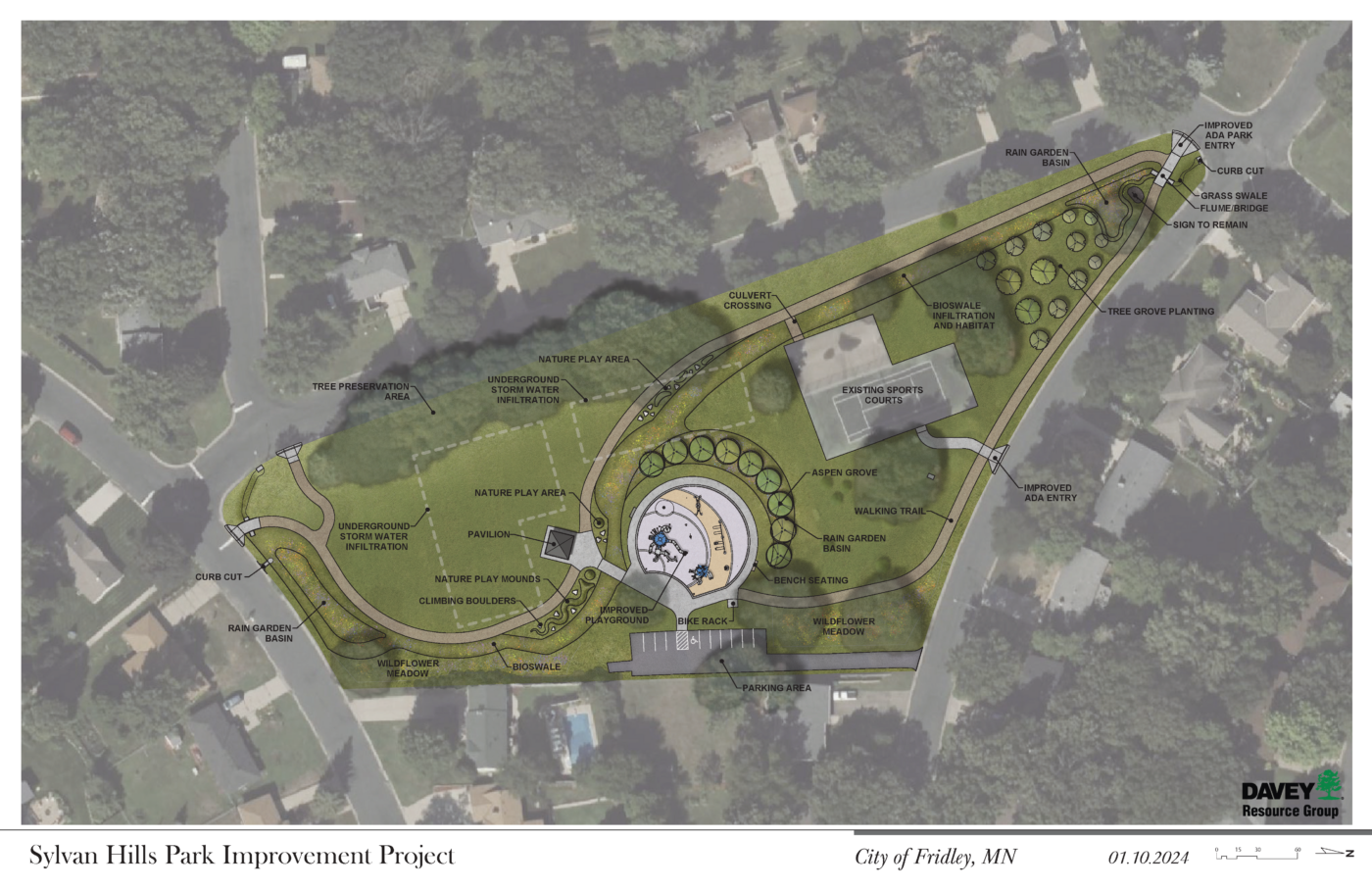
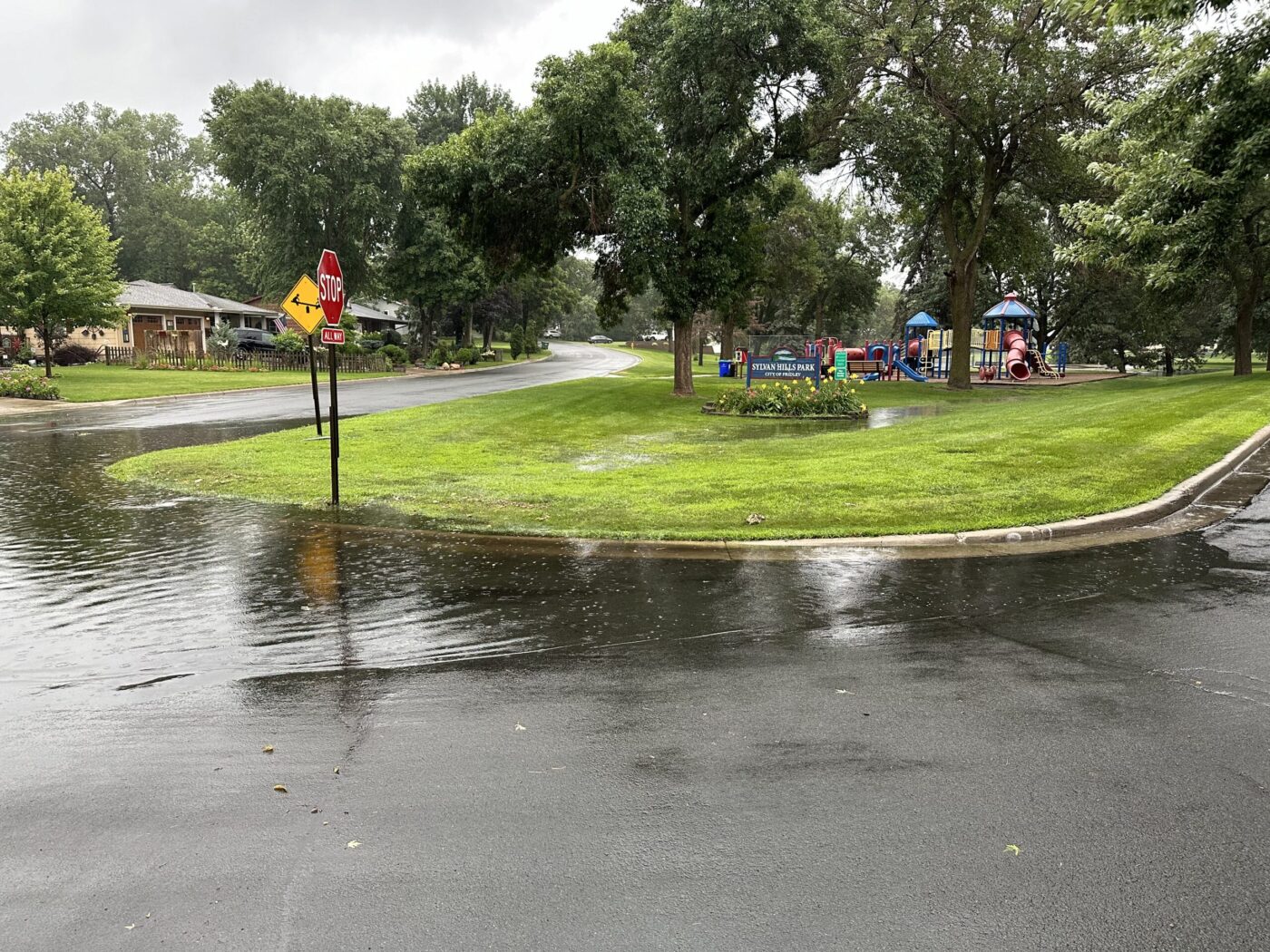
A 2024 feasibility study identified strategies for the inclusion of stormwater management, flood mitigation, and habitat enhancement in the park redesign. The resulting plan for the park includes a hydrodynamic separator, underground infiltration tank, and surface infiltration basins, all connected by a continuous bioswale to an aspen tree grove. Stormwater that flows through a key storm sewer pipe from the upstream drainage area will be diverted to the hydrodynamic separator for pre-treatment before entering a pair of underground infiltration chambers which extend unseen for hundreds of feet on either side of the walking path. The underground chambers temporarily store and filter up to 375,000 gallons of stormwater.
These features in concert will allow this 2.6-acre park to capture and treat stormwater runoff from a 77-acre drainage area upstream of the park, preventing an estimated 16.1 pounds of total phosphorus and over 5,000 pounds of sediment from being discharged to the Mississippi River annually.
The surface green stormwater infrastructure and 27,000 square feet of newly created habitat areas don’t just improve stormwater management; they also engage and educate park visitors. Above ground infiltration basins and the winding ephemeral stream that connects them will temporarily fill with water during significant rainfall events. Natural play areas along the walking trails will augment the traditional playground. A wildflower meadow, a grove of aspen trees, and native pollinator plantings in the bioswales and other areas of the park will increase the ecological diversity of this green space.
This project demonstrates the efficiencies of scale that can be achieved through a regional approach to stormwater management and could serve as a model for future neighborhood park redesign projects.