Having spent his career studying the weather, Mike Lukes has witnessed some profound changes. For one, the retired meteorologist and St. Paul resident said our ability to model and predict weather patterns has vastly improved.
“The technology has really blossomed,” Lukes said. “From when I started to where we are now, it’s been a revolution.”
At the same time, that improving technology has made it clear that we are in an era of climate change, with higher average temperatures, increased precipitation, and more frequent intense storms becoming the new normal.
“Especially in the last 20 to 30 years, with the higher precipitation and the changes to the Jetstream, we’re seeing the effects,” he said.
Lukes grew up in a suburb of Chicago, where he grew fascinated with the region’s famously temperamental weather. He earned a bachelor of science degree in meteorology from Northern Illinois University and enlisted in the U.S. Navy after graduation in 1976, later attending Officer Candidate School.
As a Navy officer, Lukes served in such far-flung places as Antarctica, Guam, New Zealand, and Egypt. He left active-duty service to earn his master of science degree in meteorology from Florida State University, then briefly went back to work for the Navy as a civilian. He finally joined National Weather Service (NWS), where he spent the remainder of his career as a service hydrologist and upper air test program manager before retiring in 2017.
It was during his time at the NWS that he first encountered a watershed management organization while working on a project in the Red River Basin.
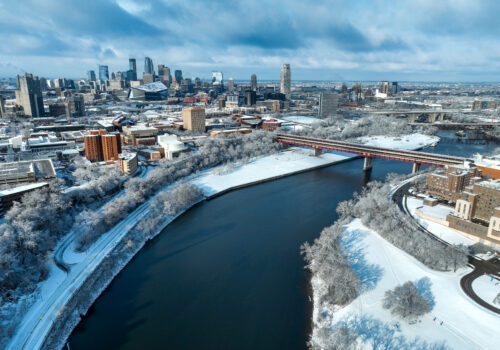
Lukes recently brought his wealth of scientific knowledge to the Mississippi Watershed Management Organization’s (MWMO) Board of Commissioners. The St. Anthony Park Community Council nominated him and St. Paul Mayor Melvin Carter appointed him to fill St. Paul’s seat on the board, which had been vacant since 2019.
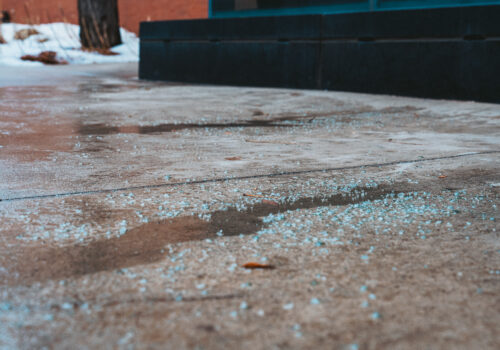
The MWMO watershed’s boundaries include just a small, 0.34-square-mile sliver of St. Paul. Within that sliver, however, lie some unique water features: the Kasota Ponds, the only wetlands in our watershed. Though small, the three waterbodies provide habitat for a variety of creatures and are beloved by many of the locals. Lukes himself is a fan of the ponds, and is concerned about their increasingly salinity levels from road salt.
In his free time, Lukes enjoys hiking, canoeing, and walking around Como Lake. He’s also been taking courses at the University of Minnesota as a senior scholar.
You can read a recent article he wrote on climate change for the Park Bugle.